
In a recent course, we boldly anointed Robert Adam, the 18th century Scottish architect, ‘a particular genius’. He is not alone. There have long been ‘particular geniuses’ in architecture. Their identities may be known or hidden – relegated, swept to the margins of remembered history by intentional or unintentional sexism, or racism or religious phobia. Hoping to be inclusive and sustainable in our teaching, we celebrate others who could be seen as ‘icons’, but there are too many connotations to that term. Suffice it to say they do share in common one trait with Adam. They too are ‘particular geniuses.’
NB: We include those individuals who have built new structures, and those who primarily renovated, extended, and expanded the spaces in an existing structure.
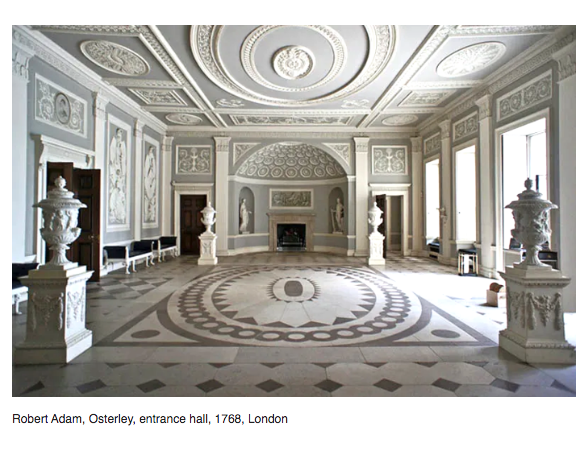
We began with the ‘particular genius’ Scottish architect Robert Adam (1728-1792) who has proven impossible to label simply as an ‘architect’; he was more than that word denotes. Yes, he was an ‘architect,’ that is, one with impeccable training, and, from a pedigree family of architects. He spent years out on his Grand Tour drawing. Nevertheless, he occupied a different position from that of his family, and from his British colleagues.
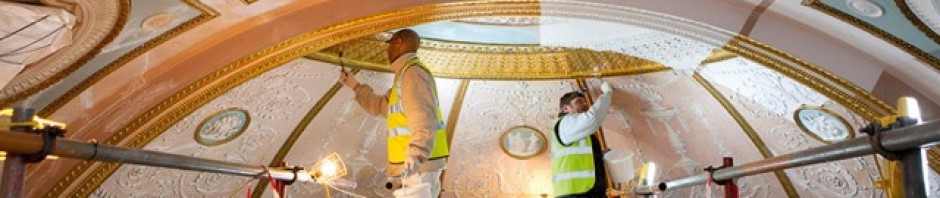
Was he an artist? One with an endless supply of ‘tools’ in his toolbox, in his studio and workshop, in his fecund mind? His rooms, from halls to drawing rooms and staircases are works of art capable of transcending their physicality by effortlessly flowing uninterrupted from one square foot into the next. Osterley and Syon House are bigger than the sum of their parts; they are total works of art inside and out.
Was he – to use a broader term – a designer? Yes, there is a discernible balanced and interrelated design unity in his work. Even his paint and marble choices stand as evidence of an intent to offer a particular experience for those who enter.
Was he an interior architect? Yes, he did not hesitate to deconstruct in order to reconstruct: he removed impedimental room features that restricted movement whether floors, ceilings or walls. He managed to do extensive internal deconstruction while leaving exterior architecture largely intact. This takes often acrobatic manoeuvres to maintain the integrity of the structure; it is far easier to start from scratch.
Was he what we now identify as a space planner? Yes, he understood how spatial relationships function to ease the use and appearance of a given space. He instinctively understood the importance of fluidity between adjacent spaces – between their points of entrance and their points of exit. He didn’t stop there, but developed each room in dialogue with other rooms, as well as with the infrastructure and exterior of the building. This concept of an integrated aesthetic throughout would not have been easy to acquire by conventional means, through the finest education or three years of intense travel and study in Italy. He was clearly born with the gift of heightened perception of the visual world.
Was he a decorator as we know one today? Yes, his paint and marble schemata are legendary. His paint palette that of a sensitive colourist, his marble floors and fireplace surrounds complementary to the given palette and the function of the room. Again, these surface treatments are necessary, even predictable, elements in most interiors, but in his hands they became parts of a surprising, even uplifting, aesthetic and unity throughout. He was rare for his time, and continues to be in our day.
Indeed, Adam was extraordinary: he was both considered and spontaneous; he was both rational and creative; he was a pragmatist and a free spirit! He was gifted with the ability mentally to manipulate and execute all peripheral disciplines in a given project. Perhaps, that gestalt in one human is what makes for a ‘particular kind’ of genius.
With Adam setting a high bar for total design mastery we turn to celebrate other artful architects from the past and present time. Whether working today or in the past, the men and women whose work we celebrate all share one thing in common with Adam. Through their completed works they strive to transport us. They too produce work that is impossible to ignore. When we are in their consciously designed spaces we feel we are in the hands of a master or mistress of the craft. Art in architecture, architecture as art, surrounds us at every turn and removes us from our everyday preoccupations and abrasions, transporting us, possibly transforming us. First we must allow ourselves to release the grip of the familiar architectural solutions.
We will delve into the lives and works of some of the most well-known, as well as some of the least known, architects. Our scope will be fully international as we celebrate those who have left an indelible mark on the built environment. Please join us as we explore artful architecture!


She was the second woman to graduate with a degree in architecture from the MIT (Massachusetts Institute of Technology) School of Architecture. She was one of the first licensed female architects in the world. She was also an artist. She was a furniture designer. She was a poet. According to architecture critic Reyner Banham, Griffin was ‘America’s, and, the world’s, first woman architect, who needed no apology to the world of men’. Yet after working closely for 15 years on projects with Frank Lloyd Wright, he stole her powerful finished drawings that had been so instrumental to his success, giving her no credit. He was her nemesis for the rest of his life. She married another architect; they moved to Australia to design the entire city of Canberra, and many other buildings. She is revered in Australia.




Eileen Gray was an Irish architect and furniture designer with no formal training. She designed a house she labelled E-1027, for herself and her lover, the writer and architectural critic Jean Badovici through whom she met Le Corbusier. Corbusier became obsessed with her and destroyed her career. She designed more than forty buildings but only two of them were ever built. Forty years after her death she is finally receiving the recognition she was denied.

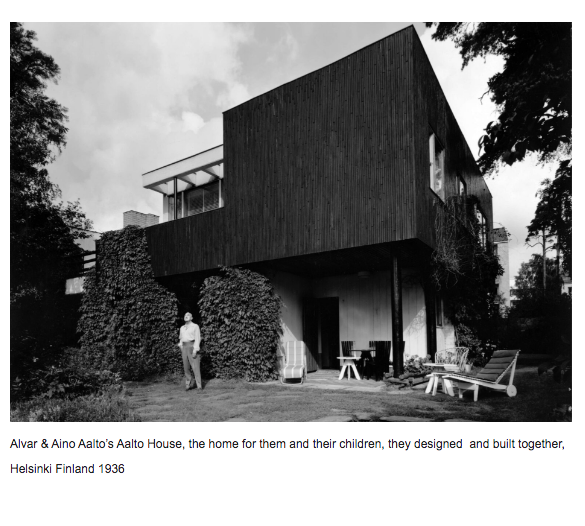
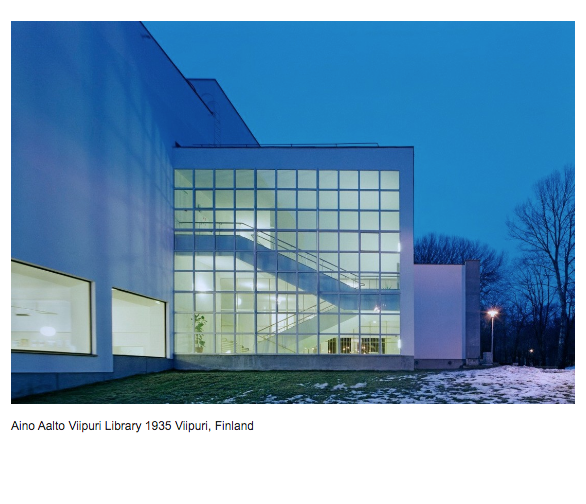

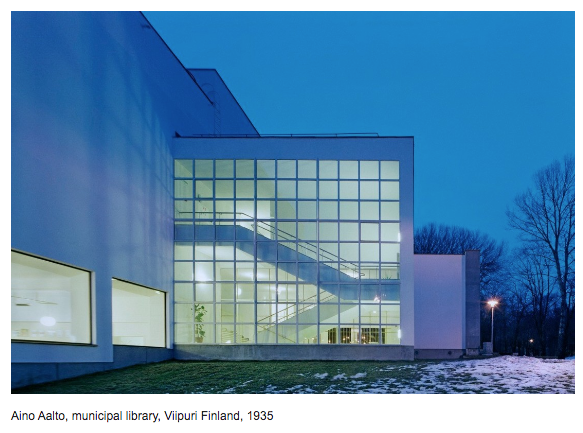
Aino Maria Marsio-Aalto (born Aino Maria Mandelin) was a Finnish architect and a pioneer of Scandinavian design. She was co-founder, then Artistic Director, then CEO of the design company Artek, perhaps the brightest star in the academic and commercial panoply. She designed absolutely every individual piece sold – the textiles, the lamps, the glassware and more! It has recently been discovered that it was Aino who completed the first project commissioned through Artek which was the Viipuri Library in 1935. Aino Aalto’s full role, not necessarily the leading role, in the material success of the Aalto vision cannot be underestimated.

Booking Information:::::::::::::::::::::::::::::::::::::::::::::::::::::::::::::::::::::::::::
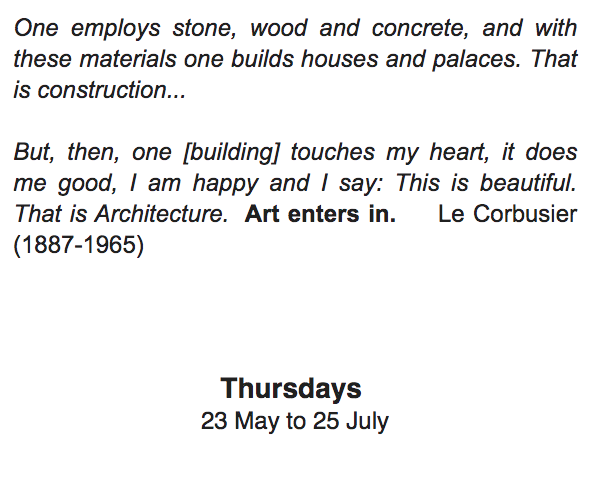
This online course via Zoom has been developed by Louise Friend. It will be presented by Nicholas Friend. It is held on Thursdays, beginning on Thursday 23 May 2024 at 5 pm and ending on Thursday 25 July 2024 at 5 pm. Please note the time of 5 pm: Nicholas will be lecturing from California (at 9 am his time) for the duration of this course.
You may choose to attend individual sessions or all ten. If you book for the course but cannot manage a particular date, then be assured we will be sending recordings of sessions to all registered participants. Each session meets from 15 minutes before the advertised time of the lecture, and each lasts roughly one hour with 15 minutes discussion.
Cost: £470 members or £570 non-members for the course of 10 sessions or £47 members or £57 non-members per individual session. All sessions are limited to 21 participants to permit an after-lecture discussion session.
Please make your payment to Friend&Friend Ltd by bank transfer to our account with Metrobank, bank sort code 23-05-80, account number 13291721 or via PayPal to nicholas@inscapetours.co.uk, or credit/debit card by phone to Henrietta on 07940 719 397. She is available Tuesdays 10-12 and 2-5 pm or Thursdays 10-12 and 2-5 pm.
How to Set Up a PayPal account::::::::::::::::::::::::::::::::::::::::::::::::::::::::::::::
Click on this link: https://www.paypal.com/uk/home
In the upper right-hand corner of the screen, click “Sign up.”
On the following screen choose “Personal account” and click “Next.”
On the next page, you’ll be asked to enter your name, email address and to create and confirm a password. When finished, click “Next.”
Click “Agree and create account” and your PayPal account will be created.
How to Connect your Bank Account to your PayPal account:::::::::::::::::::::::
Log on to your account and click the “Wallet” option in the menu bar running along the top of the screen.
On the menu running down the left side of the screen, click the “Link a credit or debit card”.
Enter the card information you wish to link to your PayPal account and click “Link card” for debit card.
How to Send Money::::::::::::::::::::::::::::::::::::::::::::::::::::::::::::::::::::::::::::::::
Log on to your account. Click Send & Request.
Enter the email address of the person you wish to send money to: nicholas@inscapetours.co.uk
Type in the amount you wish to send, click continue then press ‘Send Money Now’.
 INSCAPE CULTURAL STUDY SOCIETY