


From annual Christmas cards if nothing else, many are familiar with the brilliant calendar illuminations of the Très Riches Heures du Duc de Berry. This astonishing work of art is in the permanent collection of the Musée Condé, a museum tucked inside the Château de Chantilly. The museum boasts a superb collection of art second only to the Louvre. We see how there is far more to this beautiful book than the calendar illuminations: Gospels, Prayers to the Virgin, the Fall of Man, Psalms, Hours of the Cross and of the Holy Ghost are also exquisitely illuminated by the Limbourg brothers, Jean Colombe and others. Originally created for the brother of Charles V of France in the early 15c, it had further glorious images added at the end of the century. Its miniatures have been examined by few, but reproductions of some of them have been circulated widely, and have even succeeded in shaping an image of the French Middle Ages for many in the 20th and 21st c.
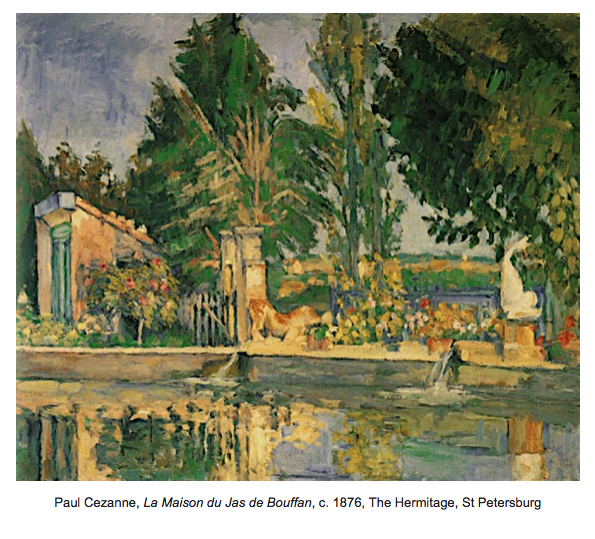
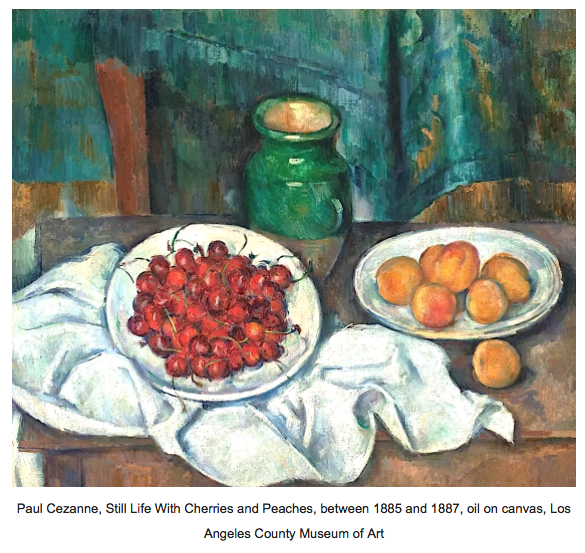
For all his radicalism, and despite a studio in Paris, Cezanne never relinquished his ties to his family home, ‘Le Jas de Bouffan’ (‘home of the winds’ in Provencal dialect) just outside Aix-en-Provence. There his ‘Card-Players’ were painted, his greatest still-lifes, and the most remarkable landscapes of the Mont Ste Victoire. The estate became his principal artistic laboratory, where he found, through patches of intelligent colour, his magnificent resolution of the central paradox of Western art: that painting needs simultaneously to provide visions of light, colour and depth while never diminishing our awareness that these illusions have been created in paint, on a flat surface. ‘With an apple, I will astonish Paris’, he once promised, rewriting the rules of perspective in his paintings. Leading museums in America, Europe and Japan, contributed to this exhibition, highlight of the 2025 ‘Year of Cézanne’. Providing fresh insight into the master’s work, it celebrates the unbreakable bond between the artist, his home, and his home country.

This endlessly fascinating show sets the work of the greatest living artist, Anselm Kiefer (1945 – ), in the context of the work of the greatest artist of the 19c, Vincent Van Gogh (1853-1890). Kiefer has never shied away from acknowledging Van Gogh’s seminal and long lasting influence on his work , not just the Dutch painter’s handling of paint, but the ‘confident construction’ of his paintings, the ‘rational structure’. Both approach three-dimensionality in their use of materials. With Van Gogh, it is oil paint layered upon layer. With Kiefer, other materials are added to the painted surfaces: straw, flowers, wire, lead, ash, clay, shellac, wood, and sand, etc. Each material can be understood symbolically as well as materially. The result is an art that is felt acutely by the spectator, in the very pit of their being, as is the case with Van Gogh. Both share an aesthetic in which there is an acceptance of the mystery that lies at the centre of true works of art. Van Gogh, Kiefer has said, ‘re-invests landscape with its secret’. The comparisons between the two are endlessly rewarding.

Daughter of a wealthy supplier of raw materials to the mining industries, Helene Kröller-Müller trained as a painter before becoming one of the first European women to create a major collection of modern art. Gifted with a keen eye as well as a fine mind, she recognised the genius of Van Gogh before other collectors; her collection of his work is second only to that of the Van Gogh Museum in Amsterdam. This revealing exhibition is devoted to her collection of Neo-Impressionist art, the most significant in the world. Looking at major works by Seurat, Signac, Pissarro, Jan Toorop, Henri-Edmond Cross and others, we explore what these artists intended by painting small dots of pure colour to create form, light and shadow. The exhibition highlights the women who played an active role in Neo-Impressionsim, including the many female supporters and collaborators who feature in the portraits on display. Prominent among the trailblazing women was painter / collector Anna Boch. Years ahead of her time, she was the only collector who bought a Van Gogh during the artist’s lifetime.
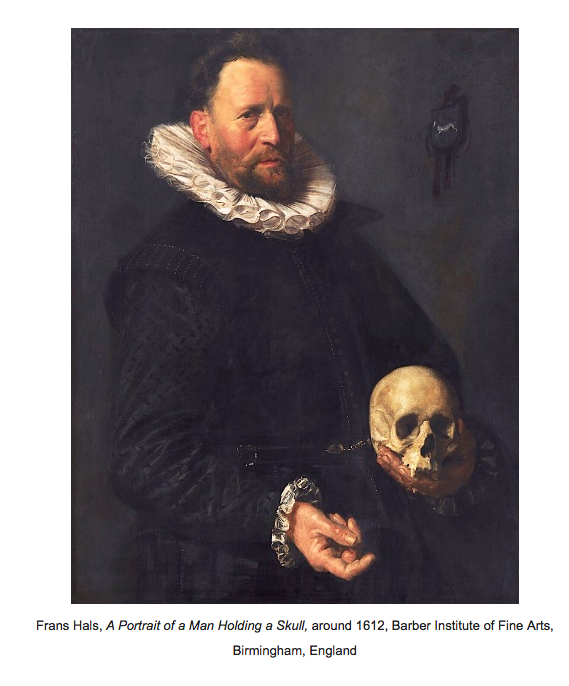
The Barber Institute of Fine Arts was founded as the art gallery of Birmingham University in 1932, the same year as The Courtauld Institute of Art. Both were intended to encourage the study and public appreciation of art. Today, the Barber Institute and The Courtauld Gallery are home to two of the finest collections of European art in the country. As the Barber undergoes renovation, the Courtauld pays host to the highlights of the Barber collection. The exhibition offers us an amazing opportunity to set the Barber highlights within the context of other university collections such as the Fitzwilliam in Cambridge, the Ashmolean in Oxford and the Courtauld itself. The Barber collection is particularly unusual as it was built from scratch over decades by a series of museum directors and curatorial staff. They made astonishing purchases, including exceptional works by Hals, Vigée Le Brun, Rossetti, Degas and Monet. Every painting is an unusual work by its painter: not one is humdrum or run-of-the-mill. Each seems selected to let its artist teach us something new about what they themselves discovered in the process of making their miraculous art.
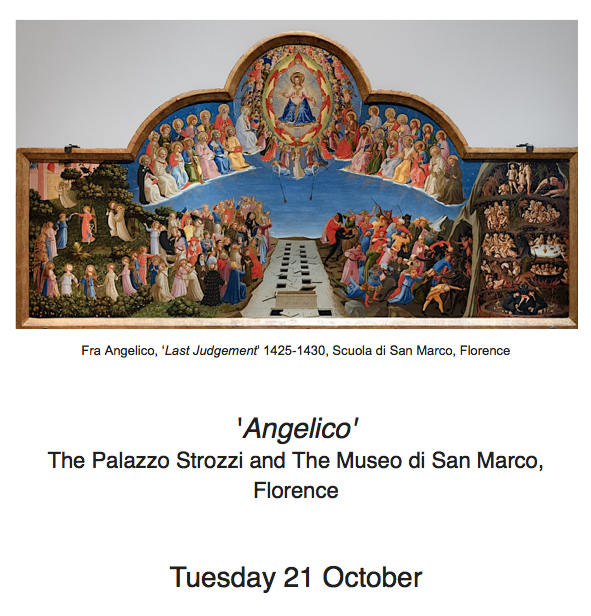
Fra Angelico is often seen as the sweetest painter of the 15c Florentine Renaissance; there is a freshness and innocence in his body of work expressed in clear vibrant colour and gentle faces. Vasari saw his ‘rare and perfect talent’ and remarked ‘it is impossible to bestow too much praise on this holy father, who was so humble and modest in all that he did and said and whose pictures were painted with such facility and piety.’ Known in his own time simply as ‘the angelic friar’, and possibly influenced by Vasari’s eulogy above (made a hundred years after his death), he was formally beatified by Pope John Paul II in 1982 for the holiness of his life. One of his greatest achievements was his commission from Cosimo de Medici in the late 1430’s to decorate the newly-rebuilt convent of San Marco with his exquisitely-felt ‘Annunciation’ at the top of the stairs, his ‘Crucifixion’ fresco in the Chapter House, and, perhaps most remarkably, a separate episode from the life of Christ for each cell of the monks as inspiration for their devotions.
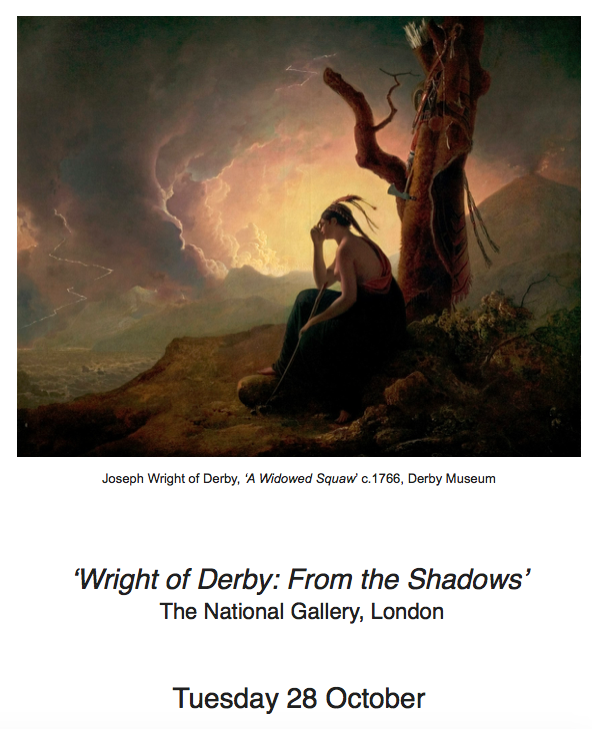
‘Joseph Wright of Derby’ was arguably one of the most interesting painters working in later 18c Europe. Many of his finest works remain in Derby, and while the Derby Museum is under renovation, this is a marvellous opportunity to see them in London. The subtitle ‘From the Shadows’ refers both to his finally emerging from the shadows of his great contemporaries Hogarth, Gainsborough and Reynolds, and also to the way in which, influenced doubtless by Caravaggio’s followers, his figures seem to emerge from their stygian surroundings accompanied by some of the finest still-lifes of the 18c. They do so in order the better to present their subjects: whether an experiment with an air pump, the meteorological effects of a volcanic eruption, a blacksmith’s forge, or an alchemist’s laboratory, the subjects contrast vividly with their backgrounds. His paintings convey a true sense of the sheer excitement science paired with industry could generate in the 18c; his work moves us to understand the very meaning of the term ‘Enlightenment’.
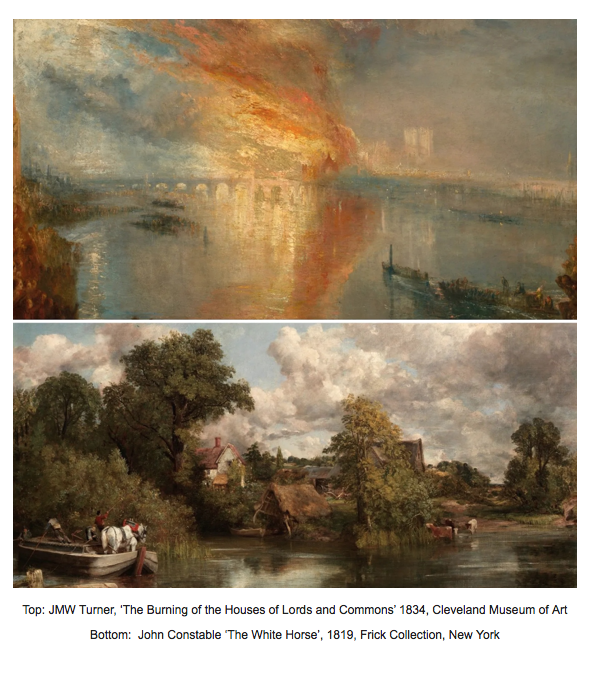
Turner and Constable, born 250 years ago, first met at a Royal Academy dinner in 1813, after which Constable commented on Turner’s ‘wondrous range of mind’; he presumably found him stimulating company. Subsequently, during varnishing day at the annual Royal Academy exhibition, Turner, worried that Constable was going to outshine him, placed a red blob of paint on his picture to ensure only his would be noticed. Perhaps Constable was less impressed at that point; certainly they had little enough in common. Turner was the barber’s son from Covent Garden, Constable the son of a wealthy East Anglian owner of land, windmills and barges on the river Stour. Turner travelled widely in Britain, France, the Alps and Italy and used his resulting sketches to compose mighty history paintings. Constable famously found most (though not all) of his subjects in ‘400 yards of Suffolk scenery’ as his biographer Leslie put it. Turner was interested in broad effects of sunset atmosphere, Constable in the specific highlight on an individual wet log. Each has a different tale to tell of the world in which they lived.
Information:::::::::::::::::::::::::::::::::::::::::::::::::::::::::::::::::::::::::::
‘Autumn Exhibitions’ is a Zoom course ( * for which we offer support to access) which has been developed by Louise Friend and will be presented by Nicholas Friend. It is held on Tuesdays, beginning on Tuesday 9 September 2025 at 5pm and ending on Tuesdays 4 November 2025 at 5pm. Please note the time of 5pm: Nicholas will be lecturing from California (at 9am his time) for the duration of this course.
If you book for the course but cannot manage a particular date, then be assured we will be sending recordings of sessions to all registered participants. Each session meets from 15 minutes before the advertised time of the lecture, and each lasts roughly one hour with 15 minutes discussion.
COST: £400 for all eight for members, £480 for all eight for non-members. All sessions are limited to 21 participants to permit an after-lecture discussion session.
Please make your payment to Friend&Friend Ltd by bank transfer to our account with Metrobank, bank sort code 23-05-80, account number 13291721 or via PayPal to nicholas@inscapetours.co.uk, or credit/debit card by phone to Henrietta on 07940 719 397. She is available on Tuesdays or Thursdays between 2-5 pm.
How to Set Up a PayPal account::::::::::::::::::::::::::::::::::::::::::::::::::::::::::::::
Click on this link: https://www.paypal.com/uk/home
In the upper right-hand corner of the screen, click “Sign up.”
On the following screen choose “Personal account” and click “Next.”
On the next page, you’ll be asked to enter your name, email address and to create and confirm a password. When finished, click “Next.”
Click “Agree and create account” and your PayPal account will be created.
How to Connect your Bank Account to your PayPal account:::::::::::::::::::::::
Log on to your account and click the “Wallet” option in the menu bar running along the top of the screen.
On the menu running down the left side of the screen, click the “Link a credit or debit card”.
Enter the card information you wish to link to your PayPal account and click “Link card” for debit card.
How to Send Money::::::::::::::::::::::::::::::::::::::::::::::::::::::::::::::::::::::::::::::::
Log on to your account. Click Send & Request.
Enter the email address of the person you wish to send money to: nicholas@inscapetours.co.uk
Type in the amount you wish to send, click continue then press ‘Send Money Now’.
 INSCAPE CULTURAL STUDY SOCIETY