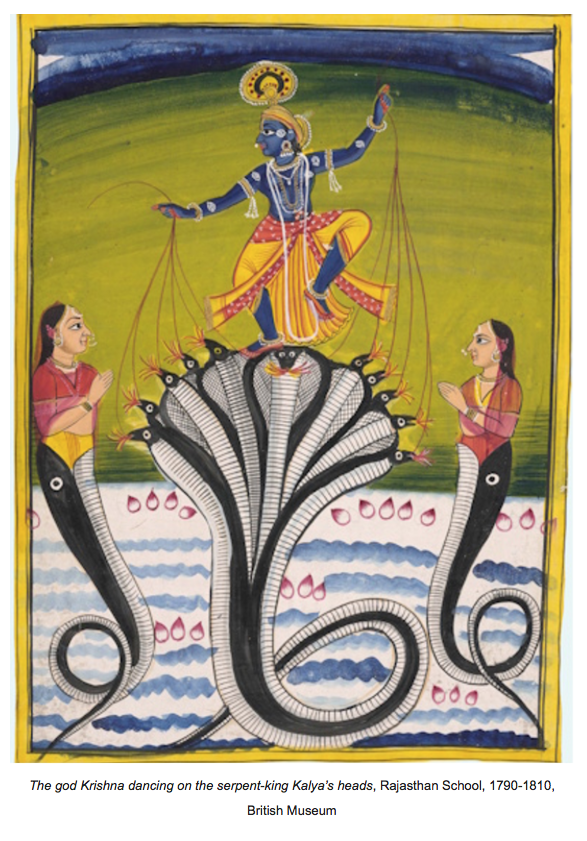
For this exhibition, for the first time, thousands of years of Hindu, Buddhist and Jain religious imagery are brought together to trace the transformation from symbolic representations of nature spirits to the human forms we are familiar with today. Featuring over 180 objects, including 2,000-year-old sculptures, vibrant paintings, drawings, and manuscripts, the exhibition examines how India’s ancient indigenous religions moulded its sacred landscape and continue to influence spiritual and artistic traditions. The spectator is taken on a captivating, multi-sensory journey through the devotional art of each religion, starting with an exploration of ancient nature spirits, and examining ideas of community, continuity, and change. It looks at how ancient religious practice has shaped living traditions today, along with the daily lives of nearly two billion people worldwide.
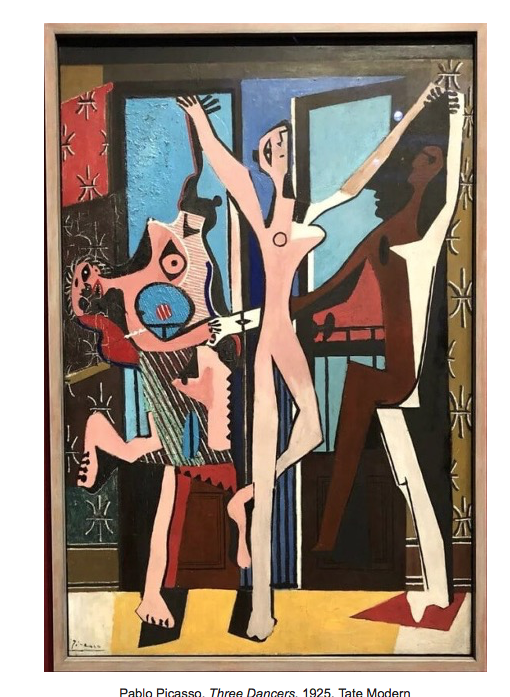
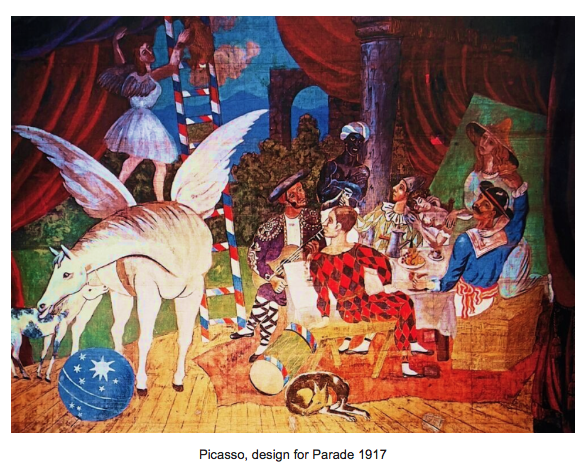
Sometimes an artist can suggest, in a single painting, the equivalent of an entire novel, one filled with all the complexities, even violence, of a love triangle and its history. Such a work is Picasso’s ‘Three Dancers’ of 1925, whose centenary Tate Modern celebrates now. The story behind the painting is one of unbearable sadness, of the love of two men, Carlos Casagemas and an old friend of Picasso’s, Ramon Pichot, for Germaine, the woman who eventually became the wife of Pichot. Casagemas tried to shoot Germaine, but missed and shot himself immediately afterwards. Picasso made a number of remarkable works inspired by Casagemas’s death. This masterpiece, unlike almost anything else Picasso was producing in the 1920s’, was brought about by his profound emotional response to the tragedy, still overwhelmingly vivid two decades after the events to which it refers. The exhibition uses this great painting as the centrepiece of an exploration of Picasso’s passionate interest in the dance and theatre, not only through his earlier work with Diaghilev, but through ways in which his entire career can be seen as performative.

After he died in Luneville in 1652, the magical work of Georges de la Tour was completely forgotten, until 1915 when it was rediscovered by the German art historian Hermann Voos. Now we see De La Tour’s work as a vital and beautiful contribution to the Caravaggiste works of the early 17c, using striking light sources, sometimes a single candle, to invite profound meditation on his subject, whether a fleacatcher, or Mary Magdalene. We compare his work to Dutch Caravaggistes who were his contemporaries, such as Honthorst, van Baburen and Vermeer, and also to Joseph Wright of Derby, whose work we explored in Part 1 of this exhibition course.
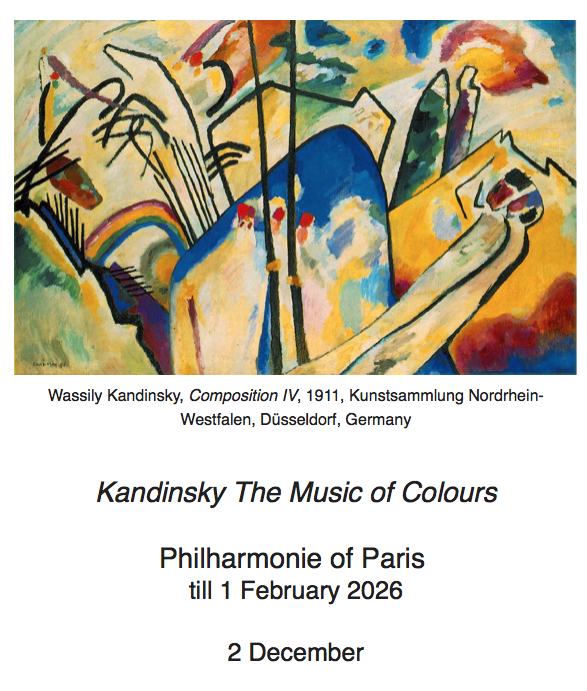
How perfect that this show is held in a concert hall: Kandinsky would have loved it. For in common with Paul Klee and Henri Matisse, Kandinsky was a musician, playing both piano and cello. Not only that: he was also a synaesthete, who heard sounds in colours and saw colours in sounds, a central premise of his great text ‘Concerning the Spiritual in Art’, in which he writes eloquently about Wagner and Debussy as well as his friend Arnold Schoenberg (a painter as well as composer), and sees the effects of music as analogous to the impact of the most inspired painting. This is a lush show that invites us to ‘hear’ paintings and delve into the oratory of abstract art!
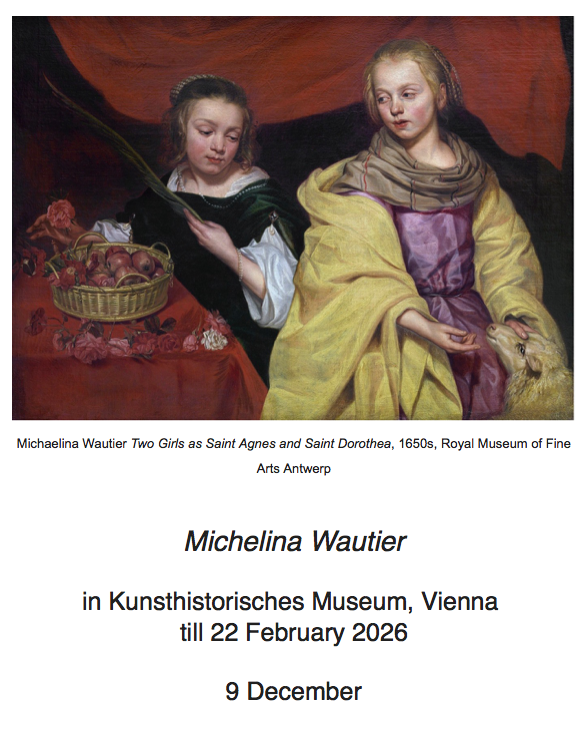
There have been many thrilling revelations recently in the field of women painters, but none more surprising than that of the work of the Flemish 17c painter Michaelina Wautier. Her subject matter was not restricted to that seen as ‘appropriate’ for a woman, such as domestic scenes or still life, but extended into the ‘male’ territory of rumbustious bacchanalian feasts (she is thought to have been the first female painter to paint the male nude), searching male portraits and realist scenes of everyday life. Famous in her own lifetime, with patrons including Archduke Leopold William of Austria, for centuries after her death her work was attributed to her brother Charles. Now the Kunsthistorisches Museum in Vienna has reversed art historical sexism and given its remarkable creator full credit!
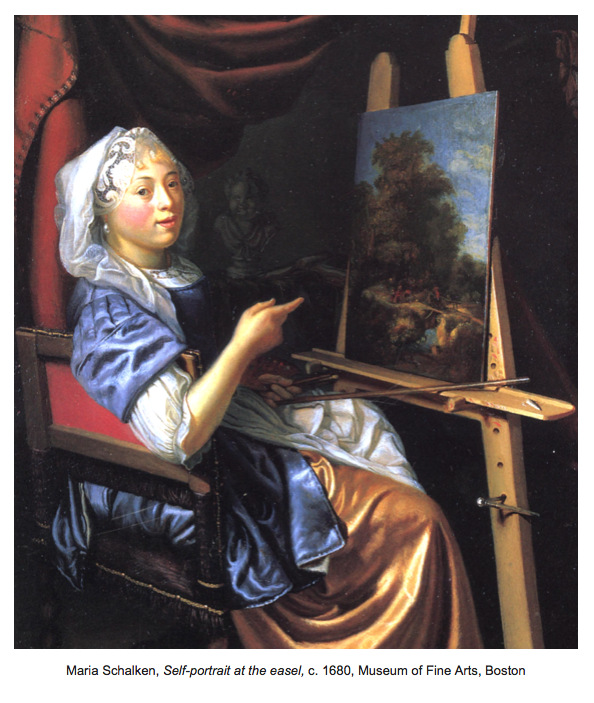
Women in the 17c Netherlands were the other half of the Dutch ‘Golden Age’. They were able to more fully express themselves – whether in domestic life, business, or art – than in earlier or later generations. We have known for some time that the works of Judith Leyster could challenge those of Frans Hals; that still life by Rachel Ruysch could rival that of Willem Claes von Heda. But this exhibition at the Washington DC Museum of Women in the Arts makes us gasp in astonishment at the range of work produced by women in this thrilling age of commercial domestic and artistic activity. Work by more than 40 17c women artists are showcased here, including a supremely confident self-portrait by Maria Schalken, a highly-focussed lacemaking lesson by Quiringh van Brekelenkam, ebullient roses by Clara Peeters, some of the first minute depictions of insects in Western art by Maria Merian, and embroideries by Joanna Koerten which were bought by the wife of the Holy Roman Emperor for a higher price than Rembrandt’s Night Watch. From celebrated painters who excelled in a male-dominated field to unsung women who toiled making some of the most expensive lace of the day, to wealthy patrons who shaped collecting practices, women completed the very fabric of the visual culture of the era.
Information:::::::::::::::::::::::::::::::::::::::::::::::::::::::::::::::::::::::::::
‘Part II: Autumn Exhibitions’ is a Zoom course ( * for which we offer support to access) which has been developed by Louise Friend and will be presented by Nicholas Friend. It is held on Tuesdays, beginning on Tuesday 11 November 2025 at 5pm and ending on Tuesday 16 December 2025 at 5pm. Please note the time of 5pm: Nicholas will be lecturing from California (at 9am his time) for the duration of this course.
If you book for the course but cannot manage a particular date, then be assured we will be sending recordings of sessions to all registered participants. Each session meets from 15 minutes before the advertised time of the lecture, and each lasts roughly one hour with 15 minutes discussion.
COST: £300 for all six for members, £360 for all six for non-members. All sessions are limited to 21 participants to permit an after-lecture discussion session.
Please make your payment to Friend&Friend Ltd by bank transfer to our account with Metrobank, bank sort code 23-05-80, account number 13291721 or via PayPal to nicholas@inscapetours.co.uk, or credit/debit card by phone to Henrietta on 07940 719 397. She is available on Tuesdays or Thursdays between 2-5 pm.
How to Set Up a PayPal account::::::::::::::::::::::::::::::::::::::::::::::::::::::::::::::
Click on this link: https://www.paypal.com/uk/home
In the upper right-hand corner of the screen, click “Sign up.”
On the following screen choose “Personal account” and click “Next.”
On the next page, you’ll be asked to enter your name, email address and to create and confirm a password. When finished, click “Next.”
Click “Agree and create account” and your PayPal account will be created.
How to Connect your Bank Account to your PayPal account:::::::::::::::::::::::
Log on to your account and click the “Wallet” option in the menu bar running along the top of the screen.
On the menu running down the left side of the screen, click the “Link a credit or debit card”.
Enter the card information you wish to link to your PayPal account and click “Link card” for debit card.
How to Send Money::::::::::::::::::::::::::::::::::::::::::::::::::::::::::::::::::::::::::::::::
Log on to your account. Click Send & Request.
Enter the email address of the person you wish to send money to: nicholas@inscapetours.co.uk
Type in the amount you wish to send, click continue then press ‘Send Money Now’.
 INSCAPE CULTURAL STUDY SOCIETY