
Weaving their way through the entire narrative of humankind, rivers have cradled and fostered the evolution of human life from settlement to civilisation. For countless millennia, they have been at the core of not only transport and shipping, but at the heart of the very survival of industry and commerce. They have nurtured our shift from bands of itinerant hunter-gatherers to landed agriculturists, and beyond to interdependent communities.
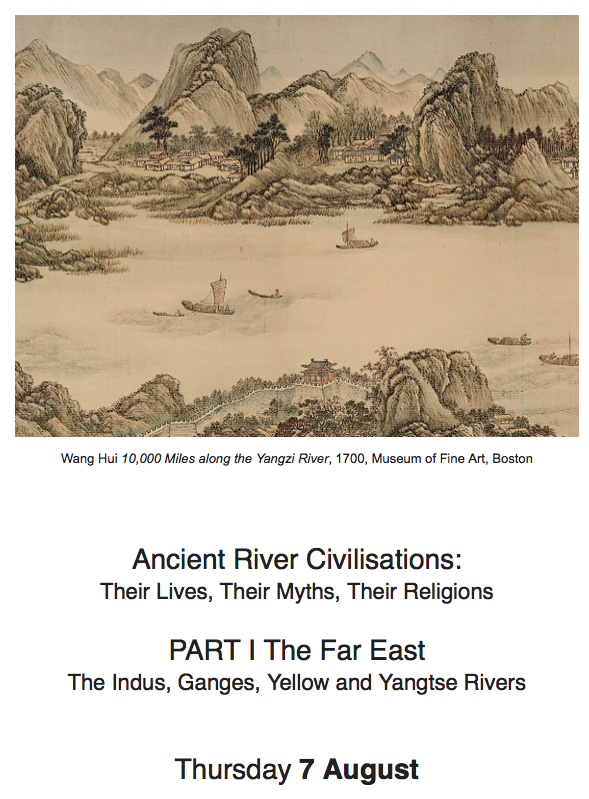
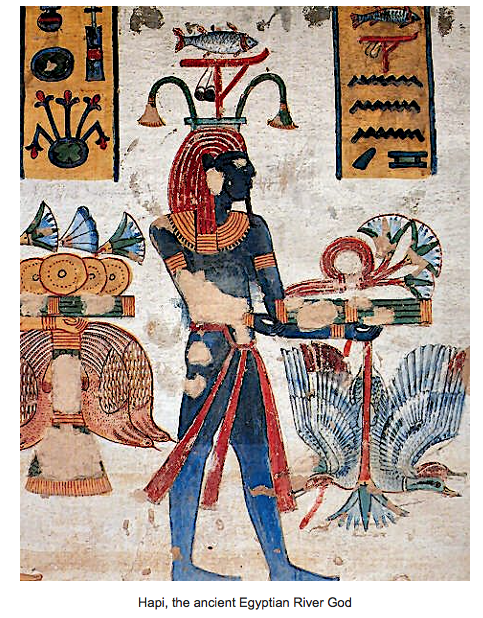
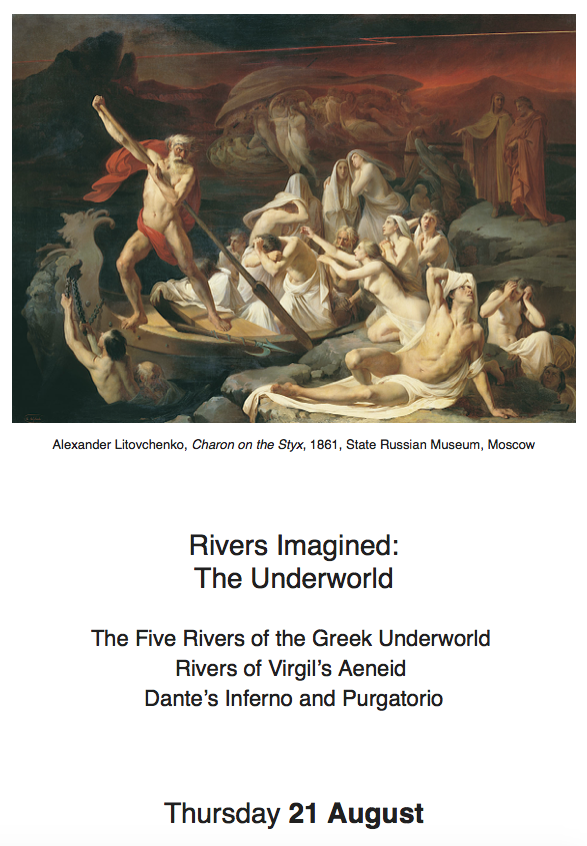
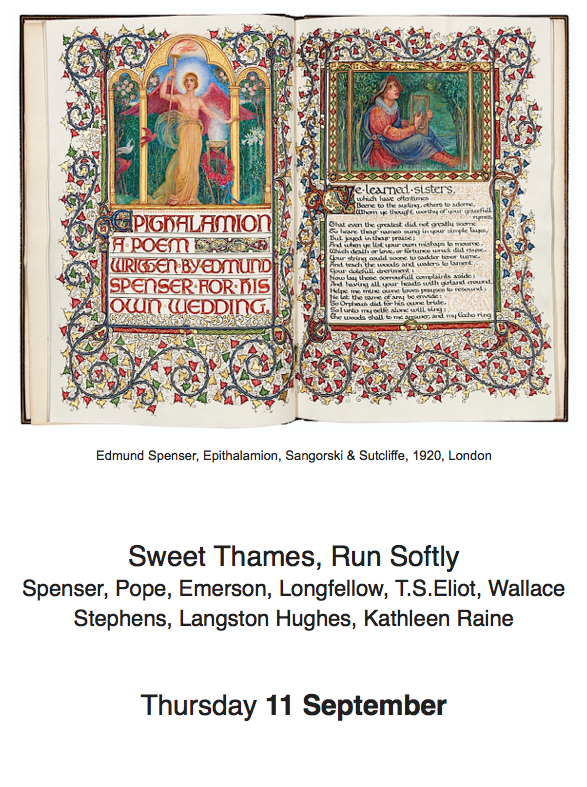
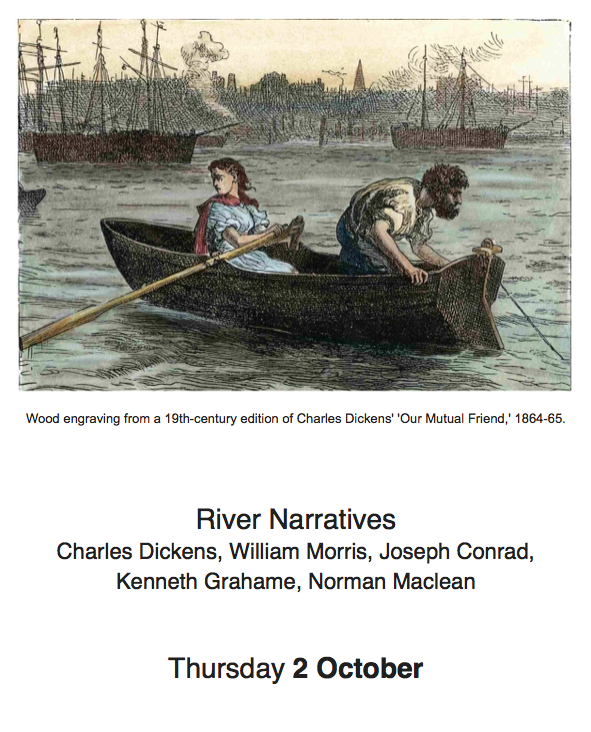
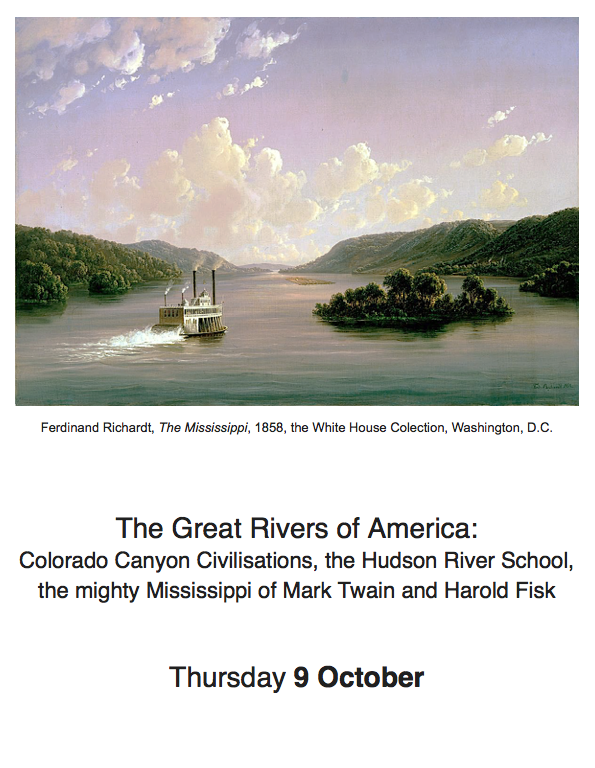
Many rivers have been worshipped as providers of life while also feared as bringers of property destruction, and, worse, loss of human life when flooding beyond their usual constraints. As boundaries they have provided security while sometimes promoting competition for adjacent land, even wars. Both mythologies and religions have developed with rivers as their inspiration: the four rivers of Paradise, the Styx of Hades, the Biblical Jordan. The Ganges is actually seen as a divine Being. The waters of the Tigris, the Euphrates, the noble Mississippi, the Congo and the Thames have each provided us with some of the greatest literature in English, from the Epic of Gilgamesh to Huckleberry Finn, Edmund Spenser to Langston Hughes; the Yangtse, the Tiber and the Seine have given us some of the most evocative art in both Eastern and Western cultures.
More recently, as we have become less dependent on them, rivers have become filled with our refuse, our discarded detritus, from shopping carts to murder weapons. They have become reminders of the horrors of our Anthropocene Age, the age when the greatest influence on the natural environment is the patriarchal man who views the rivers as dumping places, no longer worthy of worship, wonder, or protection. Currently 86% of England’s rivers are polluted, and that is not to mention the true horror of the rivers of Indonesia from the banks of which the garment factories freely gush forth their terrible toxins so that we in the western world can wear their exported colourful shirts.
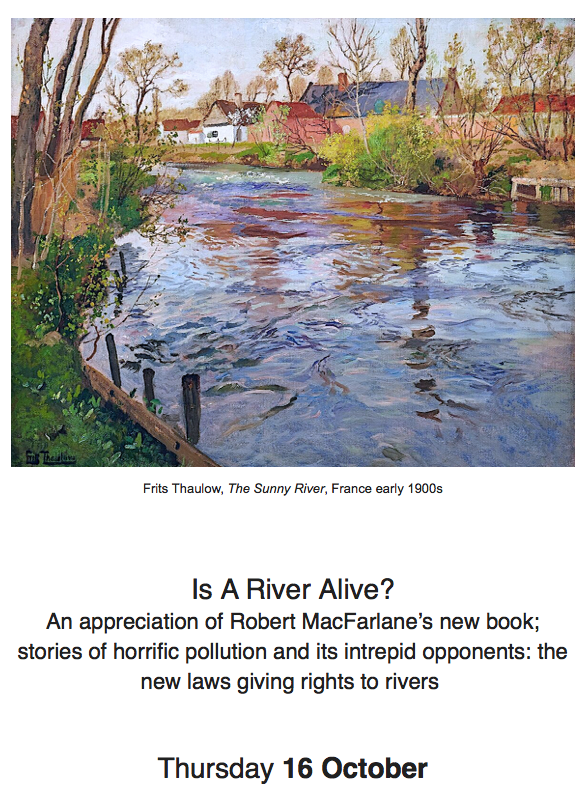
But now, the tide is turning! Just in the last few years, as Robert MacFarlane points out in his magisterial book ‘Is a River Alive?’, new laws have been passed around the globe declaring the rights of a river to have points of comparison with the rights of a human being. Everywhere in the world, major efforts are being made to understand the value of clean rivers and to scour them of their garbage, and restock them with schools of fish and beneficial flora; it is a truly uplifting story!
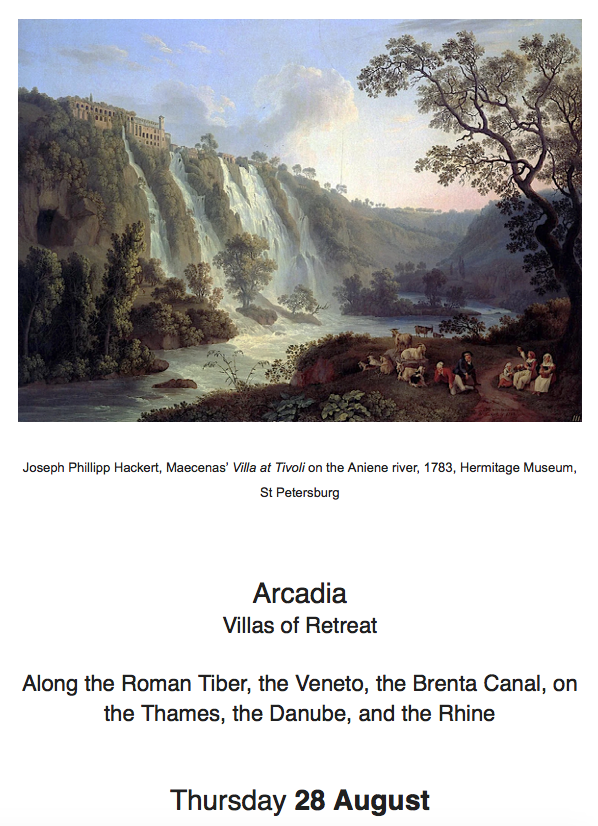
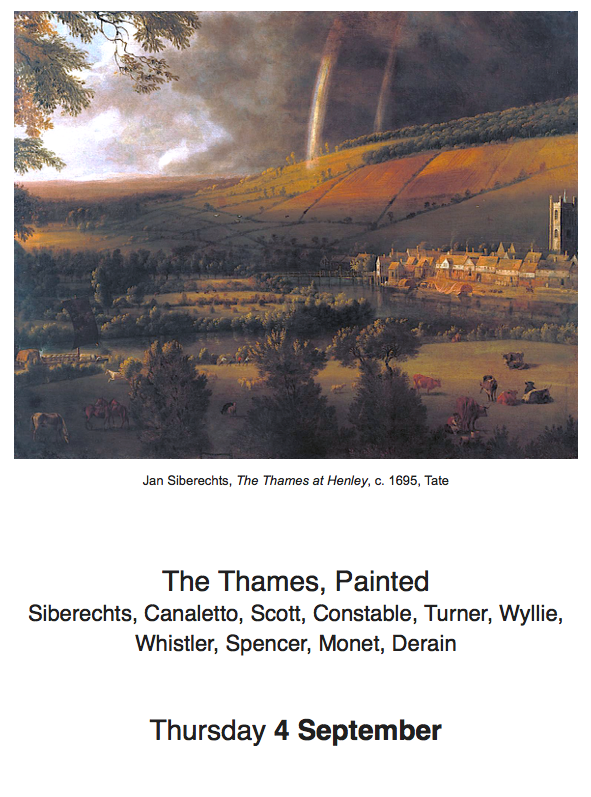
This course begins with the ancient civilisations and their dependence on their rivers; how they honoured them through written and oral mythology, paralleled by emergent religious dogma. It moves on to look closely at the role of rivers in inspiring some of the most marvellous literature in English and the most glorious fine art celebrating the vitality of rivers, whether in foaming spate or in tranquil eddies. This course will also look at the horrors of pollution of rivers balanced with heart-inspiring stories of their rescue. We shall end with an accolading discussion of Robert Macfarlane’s compelling book and its vital and uplifting message for our futures. Please do join us and add your Voice to the debate!


Booking Information:::::::::::::::::::::::::::::::::::::::::::::::::::::::::::::::::::::::::::
‘Rivers’ is a Zoom course ( * for which we offer support to access) which has been developed by Louise Friend and will be presented by Nicholas Friend. It is held on Thursdays, beginning on Thursday 7 August 2025 at 5pm and ending on Thursday 16 October 2025 at 5pm. Please note the time of 5pm: Nicholas will be lecturing from California (at 9am his time) for the duration of this course.
If you book for the course but cannot manage a particular date, then be assured we will be sending recordings of sessions to all registered participants. Each session meets from 15 minutes before the advertised time of the lecture, and each lasts roughly one hour with 15 minutes discussion.
COST: £500 for all ten for members, £600 for all ten for non-members. All sessions are limited to 21 participants to permit an after-lecture discussion session.
Please make your payment to Friend&Friend Ltd by bank transfer to our account with Metrobank, bank sort code 23-05-80, account number 13291721 or via PayPal to nicholas@inscapetours.co.uk, or credit/debit card by phone to Henrietta on 07940 719 397. She is available on Tuesdays or Thursdays between 2-5 pm.
How to Set Up a PayPal account::::::::::::::::::::::::::::::::::::::::::::::::::::::::::::::
Click on this link: https://www.paypal.com/uk/home
In the upper right-hand corner of the screen, click “Sign up.”
On the following screen choose “Personal account” and click “Next.”
On the next page, you’ll be asked to enter your name, email address and to create and confirm a password. When finished, click “Next.”
Click “Agree and create account” and your PayPal account will be created.
How to Connect your Bank Account to your PayPal account:::::::::::::::::::::::
Log on to your account and click the “Wallet” option in the menu bar running along the top of the screen.
On the menu running down the left side of the screen, click the “Link a credit or debit card”.
Enter the card information you wish to link to your PayPal account and click “Link card” for debit card.
How to Send Money::::::::::::::::::::::::::::::::::::::::::::::::::::::::::::::::::::::::::::::::
Log on to your account. Click Send & Request.
Enter the email address of the person you wish to send money to: nicholas@inscapetours.co.uk
Type in the amount you wish to send, click continue then press ‘Send Money Now’.
 INSCAPE CULTURAL STUDY SOCIETY