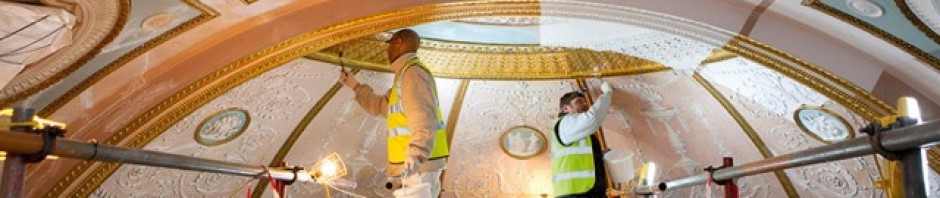
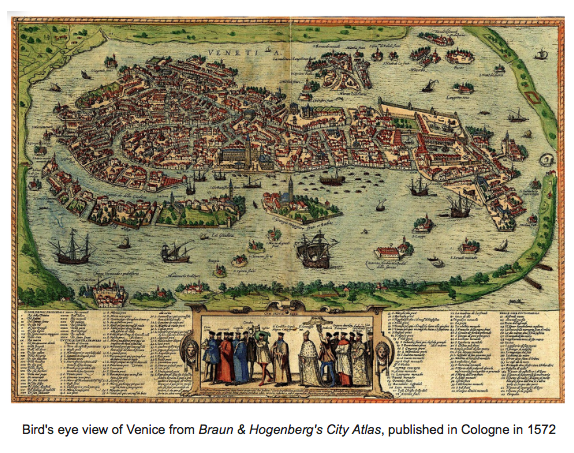
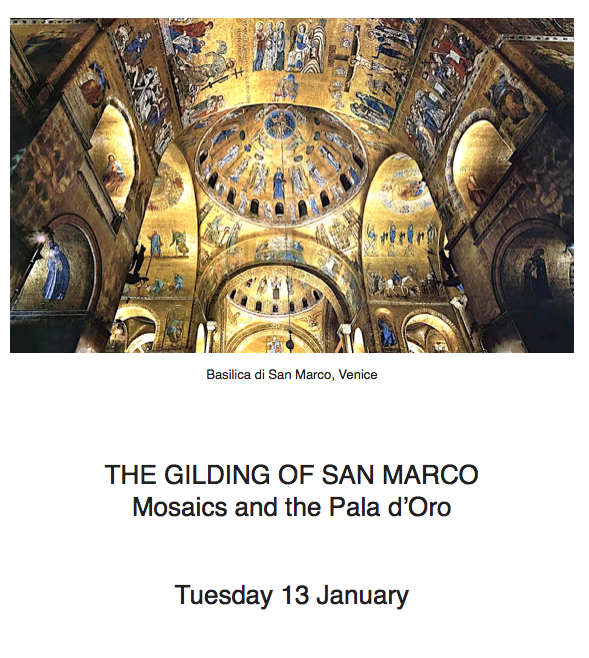
Like the never-still reflections in her canals of her colourful buildings, and omni-present bridges, Venice has always been a city in flux, perpetually remaking herself in her own image. From that magical, fluid energy, mosaic artists, painters and glassmakers have always drawn inspiration. There is even fluidity in the interactions between Venetian artists and architects, beginning with the glorious tesserae of the church of Torcello and the Basilica of San Marco, defining and illuminating the buildings’ apses and domes; church altarpieces are given focus by columned alcoves, and the rich narratives round the walls of her guildhalls are enhanced by the warmth of wood panelling. Art has served architecture, and architecture has served art. In the hands of such architectural geniuses as Palladio, Scamozzi and Longhena, to such a degree did buildings speak to each other across the water that Venice herself became a total work of art, and Canaletto and others then captured that vast canvas in their paintings.
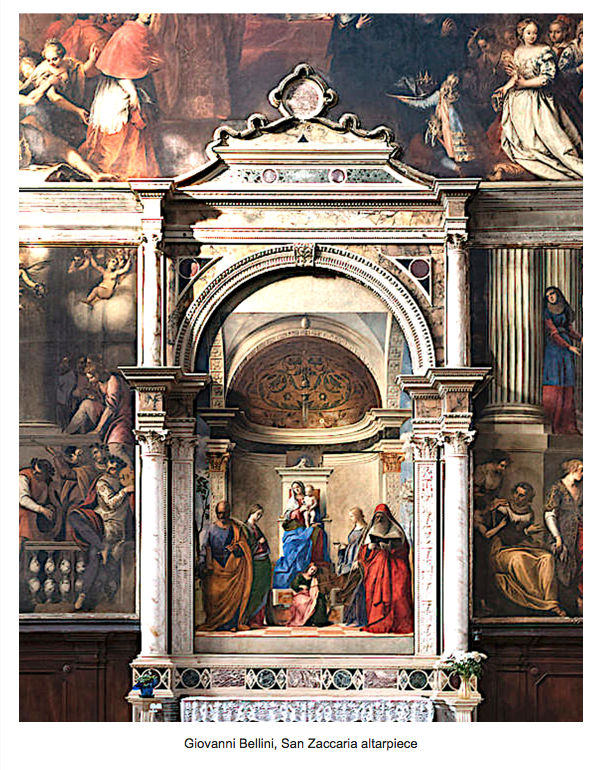
Courses on Venetian art have tended to focus on Venetian paintings scattered through the galleries of the western world. This Inscape course, however, invites us through the curtain and onto the stage, a stage for the performance of the opera which is Venice herself, with the backcloth of the long views across the lagoon, the orchestra made up of the music of art, palaces and churches, and the singers who are her people, whether a gondolier singing to a tourist or a mother singing to her child in a little piazza in the Ghetto. Here we realise that art is best seen in the context for which it was intended, relating directly to the space for which it was created. We see this symbiosis in Giovanni Bellini’s glowing altarpiece for the church of San Zaccaria, still there over 500 years after it was painted; or Titian’s explosive Madonna for the Church of the Frari, perfectly echoing the soaring Gothic heights of the church; or Veronese’s scheme for San Sebastiano, filled with reverence for the dedicatory saint who was so important to Venetians as they faced successive outbreaks of the Black Death.
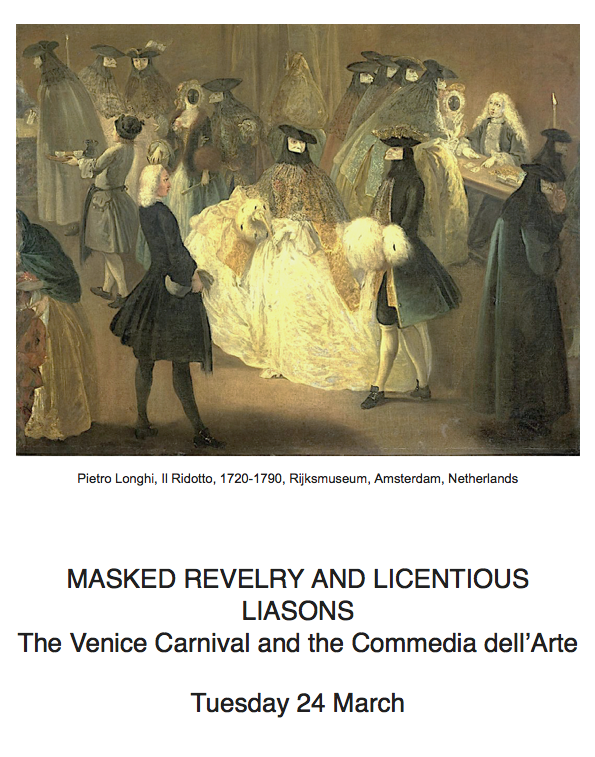
The buildings did not provide sustenance to mosaicists and painters alone. Musicians responded too, notably the Gabrielis, uncle and nephew, and Monteverdi, whose antiphonal effects in his Vespers were written especially for the majestic spaces of the Basilica di San Marco. Rivulets of sound flow over one another in this oneiric music. Later, the sweetness of much of Vivaldi’s music may be a response to those for whom he wrote it, the female orphans of the Ospedale della Pieta, many of whom became significat composers in their own right. Meanwhile Venetian opera burgeoned in the hands of Handel, Galuppi and others, eventually to find its own home in the glorious La Fenice, rising indeed as a phoenix from two massive fires, re-opening from the most recent only in 2003.
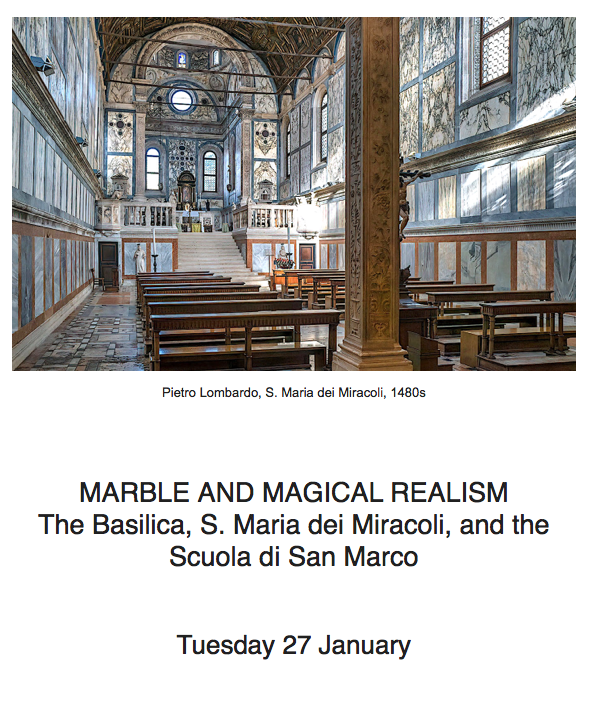
As if musicians themselves, the architects of Venice engaged in their own scenic antiphony, with buildings whose facades respond to one another across the water : Palladio’s Redentore in concert with his Zitelle and with his Redentore in concert with Scamozzi’s façade of S. Giorgio Maggiore, and all of those echoed by Longhena’s magnificent S.Maria della Salute at the mouth of the Grand Canal. Venetian Palazzi meanwhile were playing their own themes with variations, the delicate nets of Gothic saloni balconies and the abstract marbles of the Ca D’Oro giving way to the staunchly Roman arcades of the 17c Baroque Ca Pesaro. Their decoration reaches stupendous heights in Tiepolo’s awe-inspiring paintings for Ca Rezzonico, now the museum of 18c life in Venice.
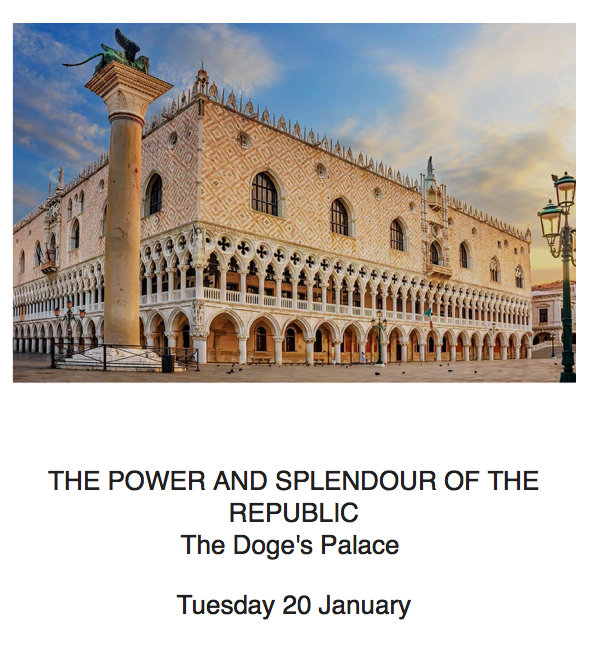
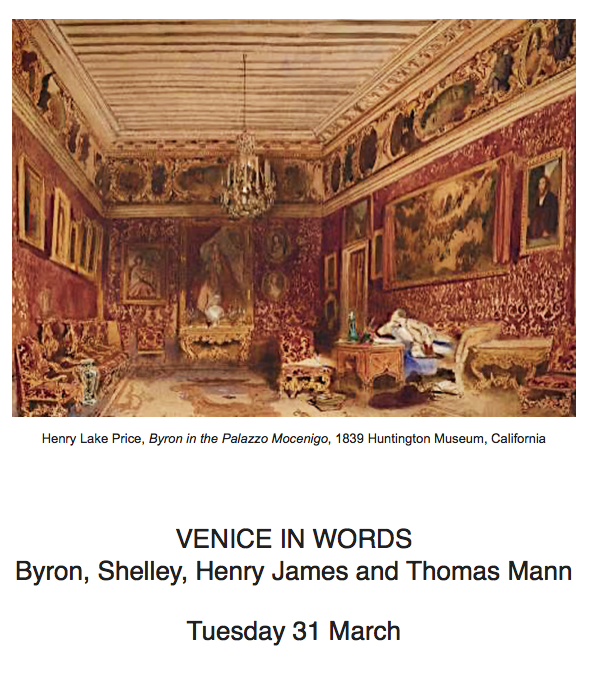
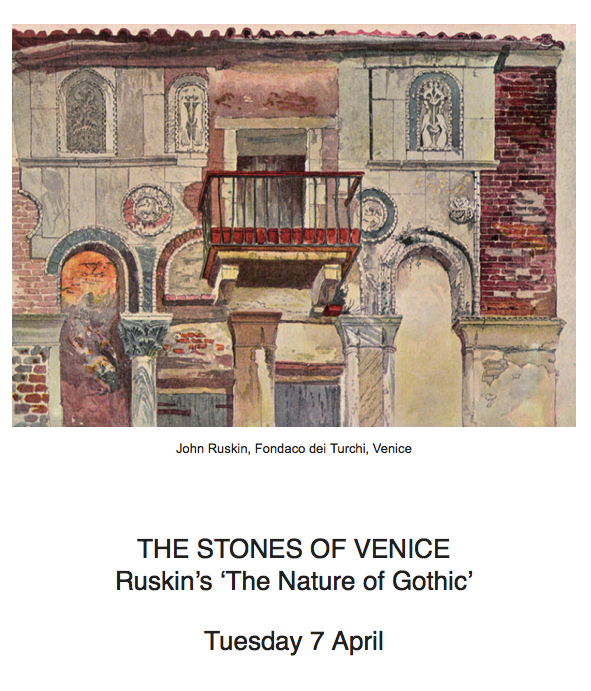
By the 19c, in the wake of Napoleon bringing an end to the Republic of Venice in 1797, writers were drawn to the city in search of the atmosphere of past glories, of faded tapestry in once-grand palazzi, and plaster peeling gently and beautifully into the green canals : Shelley came here to meet Byron in 1818, and Henry James visited frequently from 1869 until 1907, with the city providing inspiration for his collection of travel essays ‘Italian Hours’. Most famously for modern readers and filmgoers, Thomas Mann came in 1911 and found inspiration for ‘Death in Venice’. Meanwhile, Ruskin’s association with Venice is so profound and so extraordinary in its responses to the city, particularly the sculptures of the Doge’s Palace, that he will demand a session to himself.
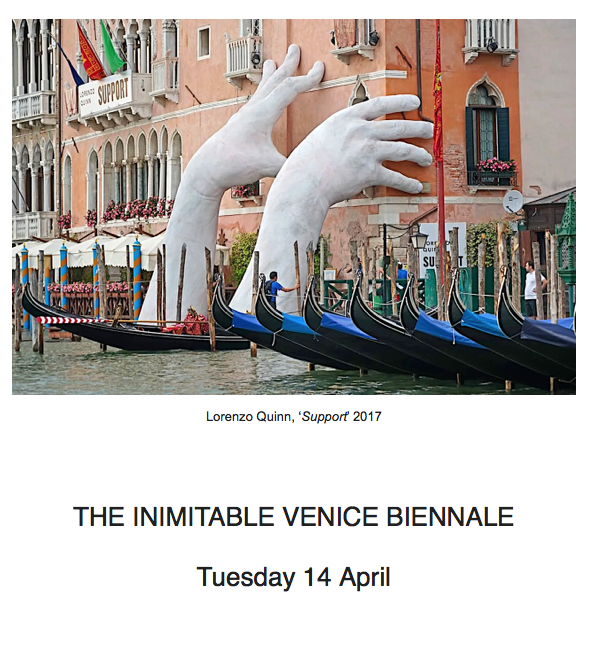
We end with a short history of the artistic carnival of Venice, La Biennale di Venezia, spilling out from the Arsenale into the whole of the city. Founded in 1895, it is one of the world’s most prestigious cultural institutions, with dance, film, theatre and architecture joining the original and continuing focus on works of art.
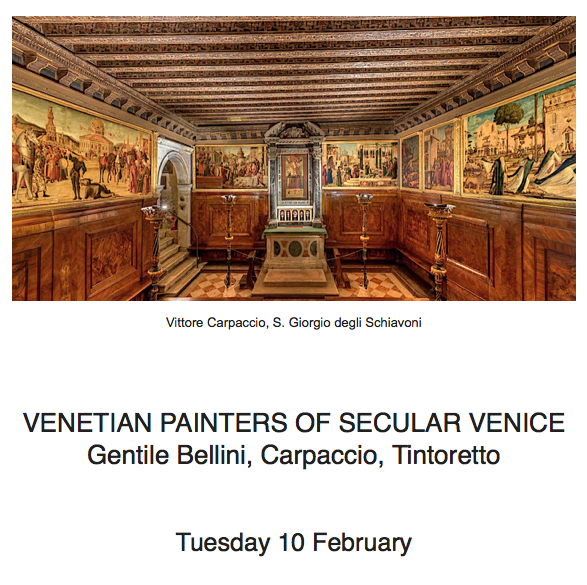
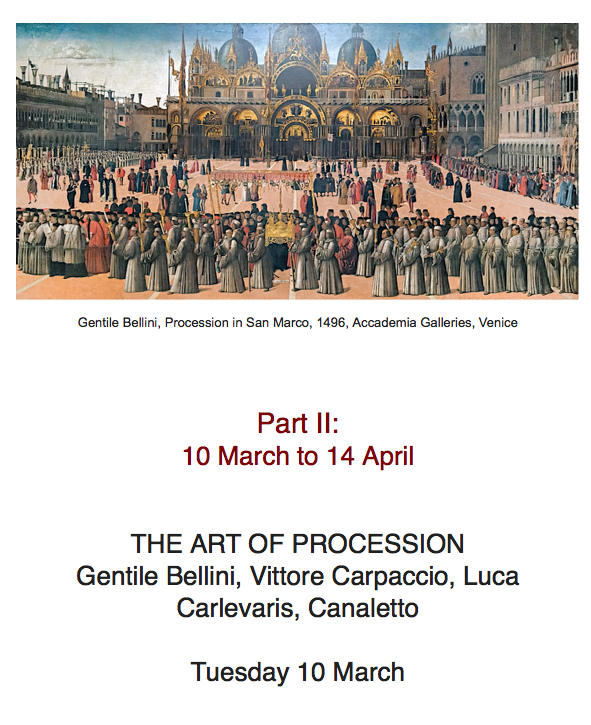
Throughout, we engage with the politics and economics of Venice: the backing of her Arsenale for her success in wars at sea; the expertise in trade on which her patricians depended; the Doge’s Palace and the Procuratie which provided for their meetings and their lodgings; and the wealthy Scuole or guilds which gave opportunities for social gathering and the administration of charity. Please do join us for an armchair immersive journey – in the comfort of our homes – to the most mysterious and lovely city on earth!



Information:::::::::::::::::::::::::::::::::::::::::::::::::::::::::::::::::::::::::::
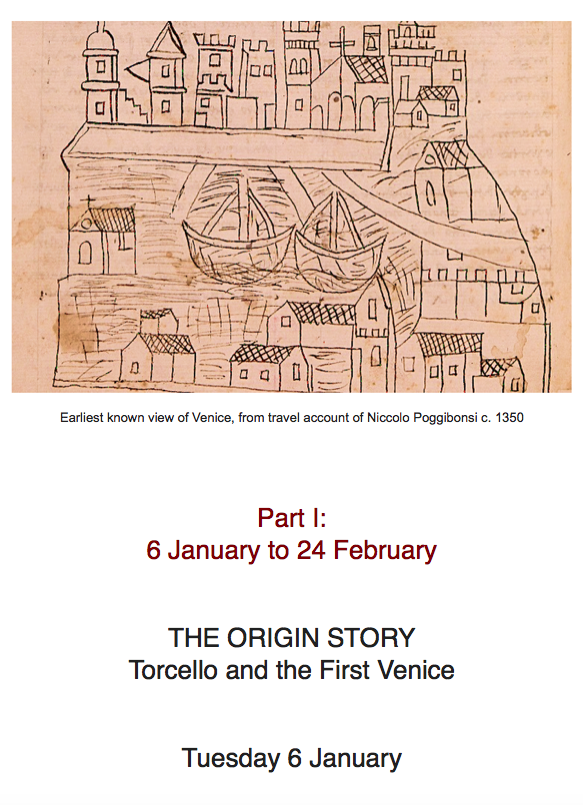
”THE CREATION AND RECREATION OF VENICE’ is a Zoom course (for which we offer support to access) which has been developed by Louise Friend and will be presented by Nicholas Friend. It is held on Tuesdays, Part I begins on Tuesday 6 January 2026 at 5pm and ends on Tuesday 24 February followed by a one week break. Part II begins on the 10 March and continues until the 14 April 2026 at 5pm.
If you book for the course but cannot manage a particular date, then be assured we will be sending recordings of sessions to all registered participants. Each session meets from 15 minutes before the advertised time of the lecture, and each lasts roughly one hour with 15 minutes discussion.
COST:
Part I: £400 for members, £480 non-members for eight sessions.
Part II: £300 for members, £360 for non-members for six sessions.
Discounted cost for the entire course of fourteen sessions £670 member, £810 for non members. All sessions are limited to 21 participants to permit a vibrant after-lecture discussion session.
Please make your payment to Friend&Friend Ltd by bank transfer to our account with Metrobank, bank sort code 23-05-80, account number 13291721 or via PayPal to nicholas@inscapetours.co.uk, or credit/debit card by phone to Henrietta on 07940 719 397 who is available on Tuesdays or Thursdays between 2-5 pm.
How to Set Up a PayPal account::::::::::::::::::::::::::::::::::::::::::::::::::::::::::::::
Click on this link: https://www.paypal.com/uk/home
In the upper right-hand corner of the screen, click “Sign up.”
On the following screen choose “Personal account” and click “Next.”
On the next page, you’ll be asked to enter your name, email address and to create and confirm a password. When finished, click “Next.”
Click “Agree and create account” and your PayPal account will be created.
How to Connect your Bank Account to your PayPal account:::::::::::::::::::::::
Log on to your account and click the “Wallet” option in the menu bar running along the top of the screen.
On the menu running down the left side of the screen, click the “Link a credit or debit card”.
Enter the card information you wish to link to your PayPal account and click “Link card” for debit card.
How to Send Money::::::::::::::::::::::::::::::::::::::::::::::::::::::::::::::::::::::::::::::::
Log on to your account. Click Send & Request.
Enter the email address of the person you wish to send money to: nicholas@inscapetours.co.uk
Type in the amount you wish to send, click continue then press ‘Send Money Now’.
 INSCAPE CULTURAL STUDY SOCIETY