
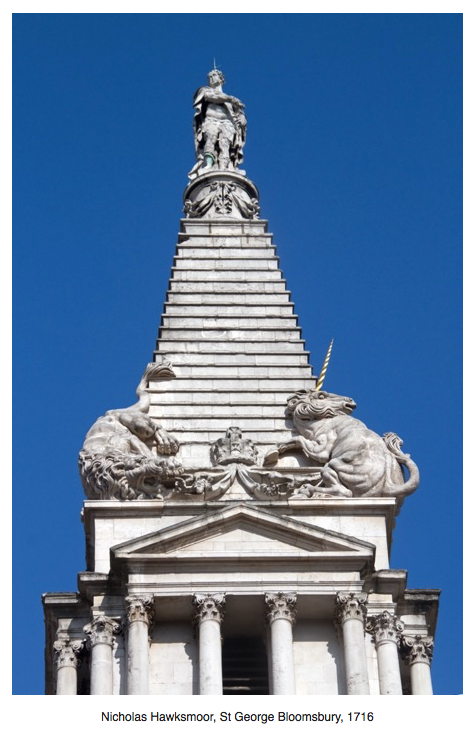
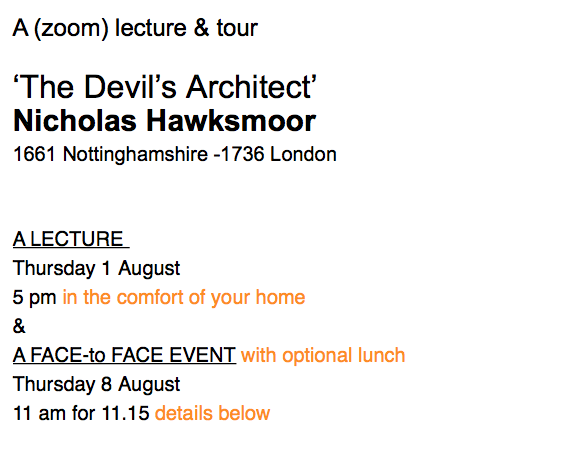
There are few architectural experiences in Britain as moving, even as exciting, as those offered by the distinct London churches designed by Nicholas Hawksmoor in the early 18th century. His approach to classical architectural vocabulary has simply never been matched in this country. In his hands, piers and pilasters soar, spires twist on their axes, keystones crash into lintels, windows seem pastry-cut out of great masses of stone, and mighty porticoes add majestic grandeur to these monuments to the august Church of England. One of the 18th century’s most prolific architects, recognition for his strikingly unique designs has been dwarfed beneath the vast shadow cast by his tutor Sir Christopher Wren, but also by a shadowy reputation perpetuated by popular culture linking it to the esoteric and the arcane.
Hawksmoor honed his architectural ideas with and against those of his consummate master, Christopher Wren, for whom he worked from 1684 to 1700, including the design and building of Chelsea Hospital, St Paul’s Cathedral, Hampton Court Palace, and Greenwich Hospital before moving on to partner other architects, and open his independent practice. While Wren and Hawksmoor shared an interest in light-filled spaces and the classical language of architecture, Hawksmoor was by far the more imaginative architect. Hawksmoor’s instinct for manipulating volume and mass produces often visceral effects. He drew liberally from an international vocabulary of historic buildings, from Baalbek in Syria to Persepolis in Persia, Solomon’s Temple in Jerusalem to the Basilicas of ancient Rome. Confronted with his churches today it is hard not to be bowled over by their colossal scale and the intensity of their layered masonry.
In the 18th century his churches were often built in areas of great poverty, whether among the poor weavers’ houses of Spitalfields, or the sprawling riverside lodgings of sailors and shipwrights at Limehouse and Wapping. In the context of their grim terraced streets, these churches must have seemed like monumental visions from another age altogether. Now, those areas have become gentrified, the churches still rise above their surroundings as iconic temples and assertions of the omnipresent spiritual power of the C of E.
The materials of his architecture communicate through resonance and dissonance almost as instruments in musical composition. Hawksmoor’s buildings are Shakespearean, full of conflict and anxiety, as well as ultimately balanced resolution. They are uniquely suited to London, a city without logic, without avenues or particularly long vistas, utterly unlike Paris, or Vienna, Berlin or Buenos Aires. These buildings stamp their identity on their sites, paying no attention to what is around them, standing as monuments to Hawksmoor’s wrought passion and unageing intellect.
Please join us as we add our voices to a rebirth of interest in this idiosyncratic architect of the first order – a yeoman farmer’s son, who became a plasterer’s apprentice, then a factotum in Wren’s household, then onward and upwards, to leap after leap as he rose : firstly to become a draughtsman in Wren’s workshop to doing full-scale working drawings on St Paul’s, to becoming Clerk of the Works at Kensington Palace before moving on to partner with others on hugely prestigious commissions, and finally to work independently. We do so hope this two-part course will pique your curiosity and add to your understanding of the extraordinary architecture of an undeniable genius.
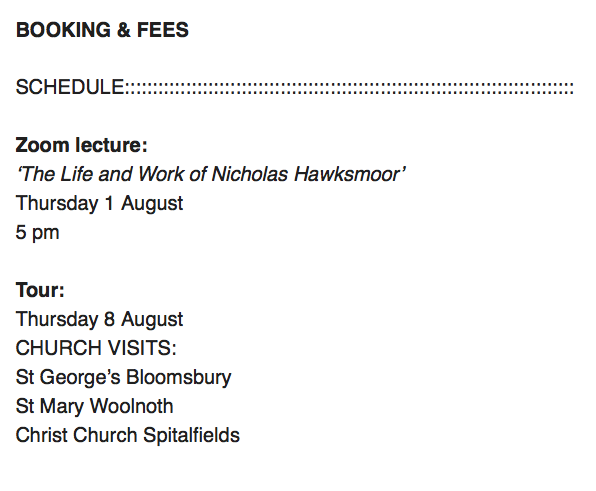
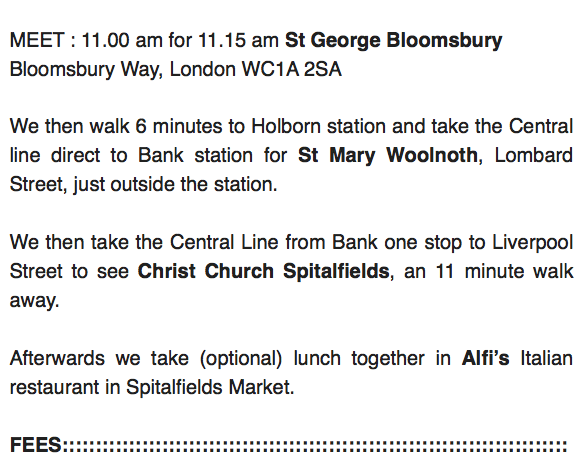
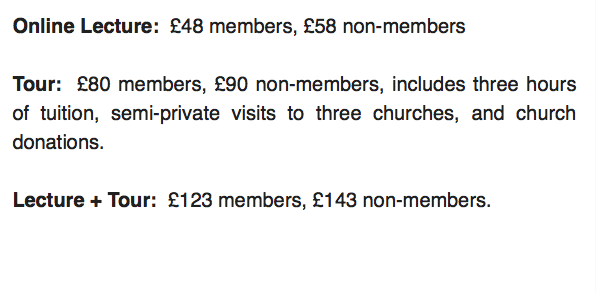
Booking Information:::::::::::::::::::::::::::::::::::::::::::::::::::::::::::::::::::::::::::
Hawksmoor has been developed by Louise Friend and will be presented by Nicholas Friend.It will be presented by Nicholas Friend. Cheques are not a viable option at this time. Instead, please make your payment to Friend&Friend Ltd by bank transfer to our account with Metrobank, bank sort code 23-05-80, account number 13291721 or via PayPal to nicholas@inscapetours.co.uk, or credit/debit card by phone to Henrietta on 07940 719 397. She is available Tuesdays 10-12 and 2-5 pm or Thursdays 10-12 and 2-5 pm.
How to Set Up a PayPal account::::::::::::::::::::::::::::::::::::::::::::::::::::::::::::::
Click on this link: https://www.paypal.com/uk/home
In the upper right-hand corner of the screen, click “Sign up.”
On the following screen choose “Personal account” and click “Next.”
On the next page, you’ll be asked to enter your name, email address and to create and confirm a password. When finished, click “Next.”
Click “Agree and create account” and your PayPal account will be created.
How to Connect your Bank Account to your PayPal account:::::::::::::::::::::::
Log on to your account and click the “Wallet” option in the menu bar running along the top of the screen.
On the menu running down the left side of the screen, click the “Link a credit or debit card”.
Enter the card information you wish to link to your PayPal account and click “Link card” for debit card.
How to Send Money::::::::::::::::::::::::::::::::::::::::::::::::::::::::::::::::::::::::::::::::
Log on to your account. Click Send & Request.
Enter the email address of the person you wish to send money to: nicholas@inscapetours.co.uk
Type in the amount you wish to send, click continue then press ‘Send Money Now’.
 INSCAPE CULTURAL STUDY SOCIETY