There is another European history, one we are unlikely to have been taught at school. It is the history of countries whose history we were not taught at school, and therefore, remain enigmatic to most of us. The story of Scandinavia’s component countries – Norway, Sweden and Denmark- struggling for autonomy from one another over the course of the 19c. The story of certain countries of Eastern Europe – western Russia, Poland, Czech Republic, Slovakia, Hungary, Slovenia – some of which suffered elimination as sovereign states. The history of Germany long before the Second Reich, let alone the horrific Third.
Accordingly, we were certainly not taught their respective art history either. The Greco-Roman-inspired traditions of Italy, France and Great Britain were of lesser significance to countries isolated by their own troubles, leading to what appears to be a strong desire to turn inward to champion their own traditions in subject matter. They gloried in the snows of winter, not just the sunny riverbanks of Impressionism. They were more comfortable with the romance of everyday life while eschewing the sacred narratives of traditional religious belief. They seemed to prefer the rich colours and details of native rural costume to the tight jackets worn by the scions of urban society.
In some cases, this art history has been forgotten because it comes from small populations far away from so-called centres of culture like Paris or London, such as those of Scandinavia or Finland or Slovenia. In others, it is forgotten because it comes from cultures that were behind the Iron Curtain until 1989: Russia, Hungary, the Czech Republic, Poland, Latvia, Lithuania and Estonia. In yet others, it is overlooked because it is the art history of those with whom Britain has been at war, notably Germany and Austria.
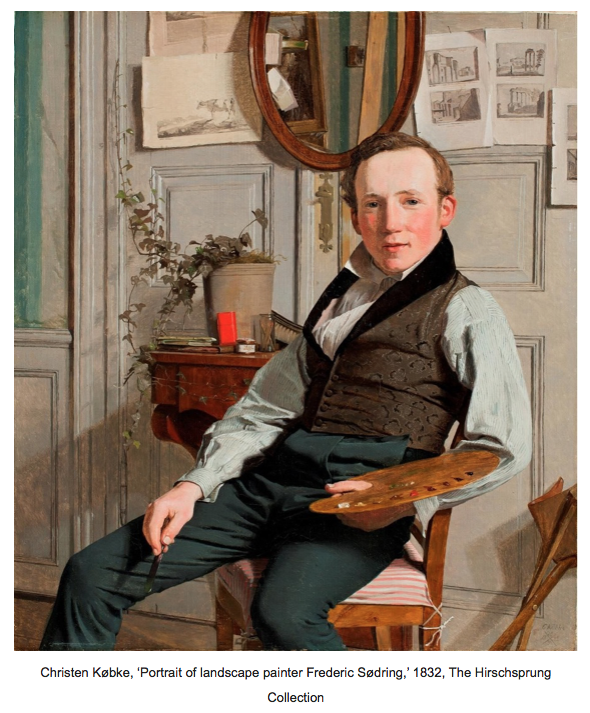
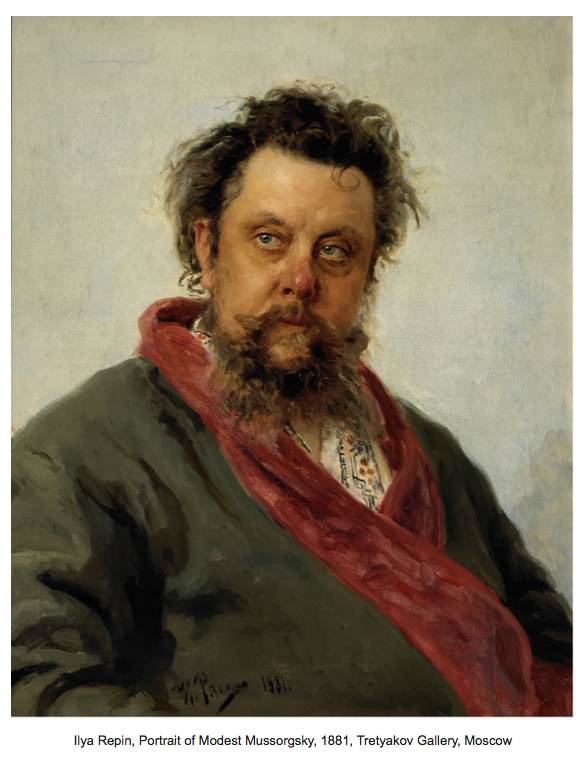
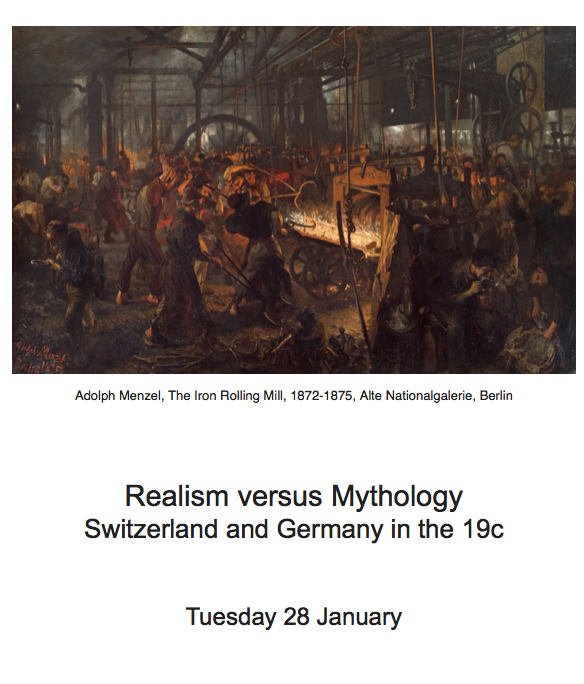
Art historians who focus only on ‘The Great Tradition of Western Art’ from the art of the academies to the avant-garde that reacted against them in the later 19c, have missed great riches from these cultures. There are few crisper, more precise and joyously clear paintings than those of Danes like Christian Købke or Christian Lund, optimistic in a time of desperate straits for Denmark; few portraits more expressive of a dissolute creative figure than Ilya Repin’s portrait of Moussorgsky; few cultures that have produced more powerfully exploratory women painters than those of Scandinavia and Finland; few greater exponents of Art Nouveau than the Czech Alphonse Mucha; few more poignant images of a great culture frequently overrun by others than those of Jan Matejko of Poland (whose painting of Copernicus wowed spectators at the National Gallery just recently); few evocations of winter more powerful than those of Fritz Thaulow or Nikolai Astrup of Norway; few paintings that echo late romantic music of, say, Sibelius, more than those of Arnold Böcklin or Ferdinand Hodler of Switzerland; while the great German painters of multiple light sources, Adolph Menzel, and of flesh, Lovis Corinth are seldom sought out by art enthusiasts even if their names are vaguely familiar.
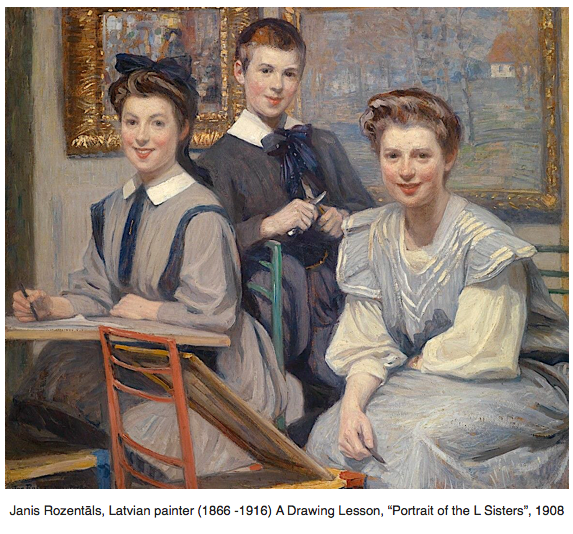
Then there are painters from these fascinating cultures who have been almost entirely forgotten outside the clean white columns of their resplendent but sometimes rarely visited National Galleries : the romantic peasant-painter, the Polish- Lithuanian Kanuty Rusiecki; the fine Slovene draughtswoman Ivana Kobilca of Slovenia; Janis Rozentals of Latvia whose portraits with their rich buttery paint can remind you of Cézanne; the richly-coloured pointillism of the Estonian Konrad Mägi; the quite extraordinary exotic figure paintings of the Hungarian-Indian Amrita Sher-Gil, and those of the transgender Danish painter Lili Elbe, inspiration for the film ‘The Danish Girl’, whose works are not well-known.
Most of the works by the artists above have remained unknown because they have had little international currency: their best paintings remain in their capital cities or in the hands of private collectors, little known to many beyond art tourists. This is indeed how I have come to know them from my travels with Inscape members. Many have stuck in my memory even more forcibly than works by much better-known names who trail an extensive literature and exhibition exposure behind them. This course will be in the nature of an exploration into the hidden depths of the unknown or the little-known art history that should not be overlooked. Do please join us!


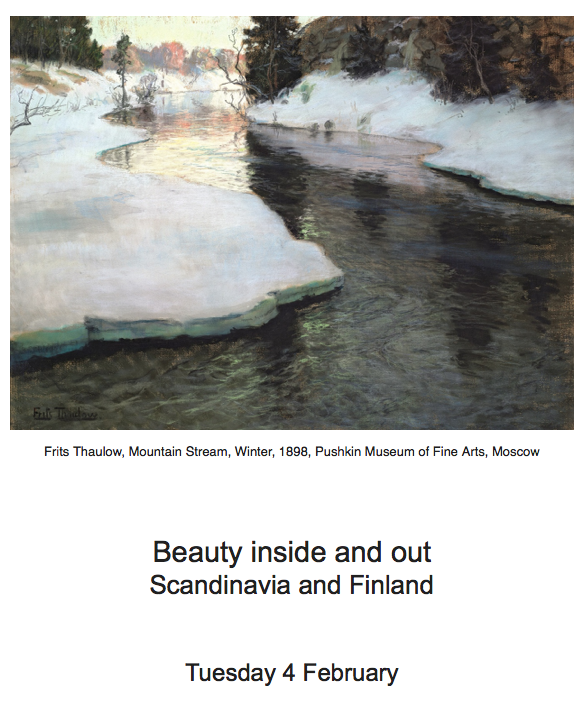
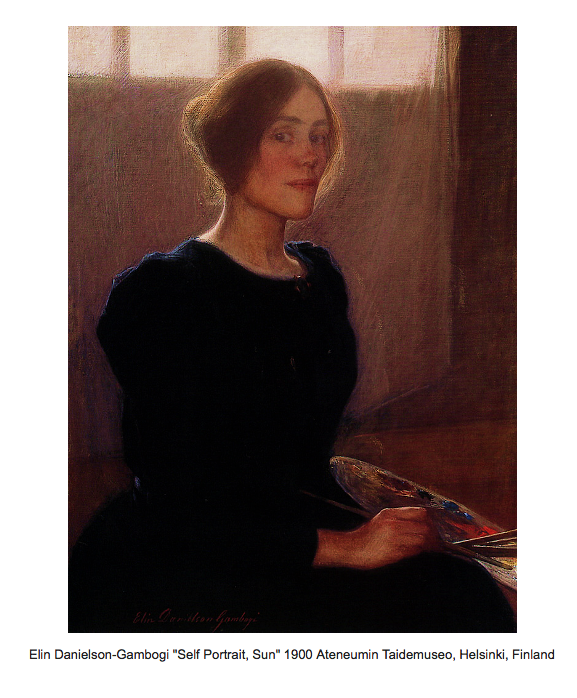
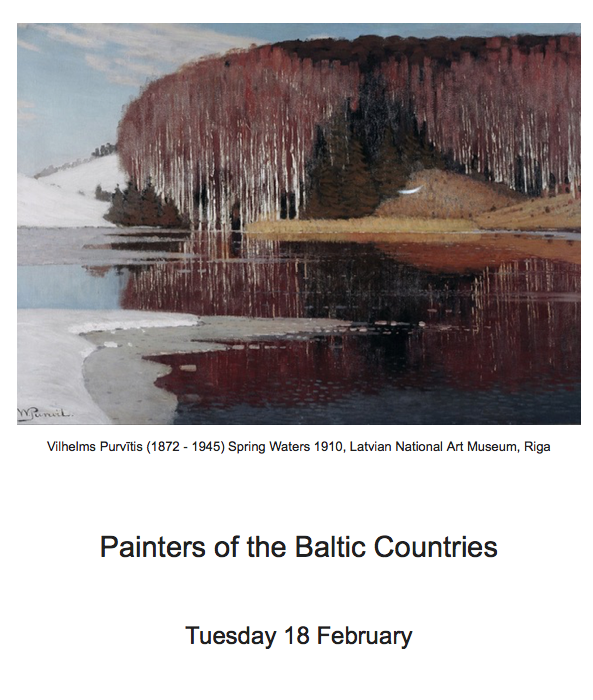
Booking Information:::::::::::::::::::::::::::::::::::::::::::::::::::::::::::::::::::::::::::
The Untaught Art History has been developed by Louise Friend and will be presented by Nicholas Friend. It is held on Tuesdays, beginning on Tuesday 7 January 2025 at 5 pm and ending on Tuesday 18 February 2025 at 5 pm. Please note the time of 5 pm: Nicholas will be lecturing from California (at 9 am his time) for the duration of this course.
If you book for the course but cannot manage a particular date, then be assured we will be sending recordings of sessions to all registered participants. Each session meets from 15 minutes before the advertised time of the lecture, and each lasts roughly one hour with 15 minutes discussion.
COST: £350 for all seven for members, £420 for all seven for non-members. All sessions are limited to 21 participants to permit an after-lecture discussion session.
Please make your payment to Friend&Friend Ltd by bank transfer to our account with Metrobank, bank sort code 23-05-80, account number 13291721 or via PayPal to nicholas@inscapetours.co.uk, or credit/debit card by phone to Henrietta on 07940 719 397. She is available Tuesdays 10-12 and 2-5 pm or Thursdays 10-12 and 2-5 pm.
How to Set Up a PayPal account::::::::::::::::::::::::::::::::::::::::::::::::::::::::::::::
Click on this link: https://www.paypal.com/uk/home
In the upper right-hand corner of the screen, click “Sign up.”
On the following screen choose “Personal account” and click “Next.”
On the next page, you’ll be asked to enter your name, email address and to create and confirm a password. When finished, click “Next.”
Click “Agree and create account” and your PayPal account will be created.
How to Connect your Bank Account to your PayPal account:::::::::::::::::::::::
Log on to your account and click the “Wallet” option in the menu bar running along the top of the screen.
On the menu running down the left side of the screen, click the “Link a credit or debit card”.
Enter the card information you wish to link to your PayPal account and click “Link card” for debit card.
How to Send Money::::::::::::::::::::::::::::::::::::::::::::::::::::::::::::::::::::::::::::::::
Log on to your account. Click Send & Request.
Enter the email address of the person you wish to send money to: nicholas@inscapetours.co.uk
Type in the amount you wish to send, click continue then press ‘Send Money Now’.
 INSCAPE CULTURAL STUDY SOCIETY